
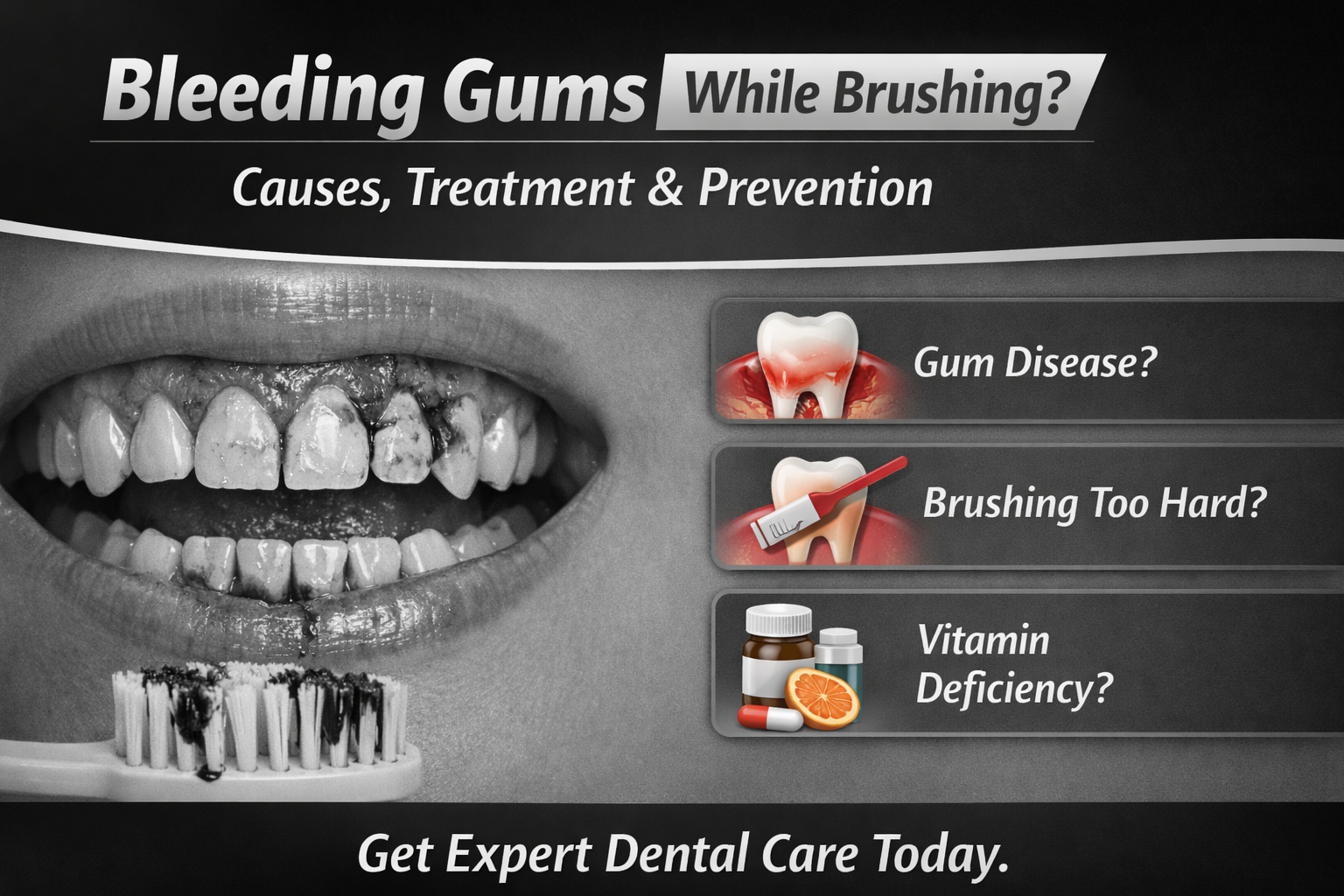
Bleeding gums while brushing is a common problem that many people tend to ignore. Seeing a little blood in the sink may not seem serious, but it’s actually a sign that your gums are not healthy. In fact, healthy gums should never bleed during brushing or flossing.
If you are experiencing this issue regularly, it’s important to understand the cause and take timely action. At Dr. SS Dental Clinic, we often treat patients who come in with early signs of gum disease that could have been easily prevented with proper care.
In this blog, we’ll explain the causes, treatment options, and prevention tips for bleeding gums, so you can maintain strong and healthy gums.
What Do Bleeding Gums Indicate?
Bleeding gums are usually a sign of inflammation in the gum tissue, often caused by plaque buildup. This condition is known as gingivitis, which is the early stage of gum disease.
If left untreated, gingivitis can progress into a more serious condition called periodontitis, which may lead to gum damage and even tooth loss.
In simple terms, bleeding gums are your body’s way of warning you that your oral health needs attention.
Common Causes of Bleeding Gums While Brushing
1. Poor Oral Hygiene
One of the most common reasons for bleeding gums is the buildup of plaque due to improper brushing and flossing. When plaque is not removed, it hardens into tartar, which irritates the gums and causes bleeding.
2. Gingivitis (Early Gum Disease)
Gingivitis is the initial stage of gum disease and is characterized by:
- Red or swollen gums
- Bleeding during brushing
- Persistent bad breath
The good news is that gingivitis is reversible with proper dental care.
3. Brushing Too Hard
Using a hard-bristled toothbrush or applying too much pressure while brushing can damage your gum tissue and lead to bleeding. Gentle brushing with the right technique is essential.
4. Vitamin Deficiency
Deficiency of essential nutrients, especially Vitamin C and Vitamin K, can make your gums more sensitive and prone to bleeding.
5. Hormonal Changes
Hormonal fluctuations during pregnancy, puberty, or menstruation can make gums more sensitive and increase the risk of bleeding.
6. Smoking
Smoking weakens your immune system and reduces your gums’ ability to heal, increasing the chances of gum disease and bleeding.
7. Underlying Medical Conditions
Certain health conditions such as diabetes or blood disorders can also contribute to bleeding gums. In such cases, both dental and medical care are important.
When Should You Visit a Dentist?
Occasional gum bleeding may not always be serious, but you should consult a dentist if you notice:
- Bleeding that continues for more than a week
- Swollen or painful gums
- Persistent bad breath
- Loose teeth
Early diagnosis can prevent serious complications and protect your oral health.
Treatment for Bleeding Gums
The treatment for bleeding gums depends on the underlying cause. At Dr. SS Dental Clinic, we provide personalized care to ensure effective results.
Professional Dental Cleaning
A routine cleaning procedure helps remove plaque and tartar buildup, allowing your gums to heal.
Scaling and Root Planing
For advanced gum issues, deep cleaning below the gum line is performed to remove bacteria and prevent further damage.
Medications
Your dentist may recommend antibacterial mouthwash or medications to control infection and inflammation.
Improving Oral Hygiene
Maintaining proper daily oral care is essential for both treatment and prevention of bleeding gums.
Home Care Tips for Bleeding Gums
You can support your gum health at home by following these simple steps:
- Brush twice daily using a soft-bristle toothbrush
- Floss regularly to remove plaque between teeth
- Rinse with warm salt water to reduce inflammation
- Use an antiseptic mouthwash
- Eat a balanced and nutritious diet
Consistency in oral care plays a key role in recovery.
How to Prevent Bleeding Gums
Prevention is the best way to maintain healthy gums. Here are some effective tips:
Maintain Good Oral Hygiene
Brush twice a day and floss daily to prevent plaque buildup.
Choose the Right Toothbrush
Use a soft-bristle toothbrush and replace it every 3 months.
Visit Your Dentist Regularly
Routine check-ups help detect and treat problems early.
Eat a Healthy Diet
Include foods rich in vitamins and minerals to support gum health.
Stay Hydrated
Drinking water helps wash away food particles and bacteria.
Avoid Smoking
Quitting smoking significantly improves gum health.
Why Choose Dr. SS Dental Clinic?
At Dr. SS Dental Clinic, we are committed to providing high-quality dental care in a comfortable and hygienic environment.
We focus on:
- Accurate diagnosis
- Advanced treatment methods
- Personalized patient care
- Preventive dental solutions
Our goal is to help you achieve long-term oral health and a confident smile.
Frequently Asked Questions
Is bleeding gums while brushing normal?
No, healthy gums should not bleed. It is usually a sign of gum inflammation or disease.
Can bleeding gums be cured?
Yes, with proper dental treatment and good oral hygiene, bleeding gums can be treated effectively.
How long does it take for gums to heal?
With the right care, mild gum problems can improve within 1–2 weeks.
What is the best way to stop bleeding gums?
Maintaining proper oral hygiene, using a soft toothbrush, and visiting a dentist are the best ways to stop bleeding gums.
Conclusion
Bleeding gums while brushing should never be ignored. It is often an early warning sign of gum disease or poor oral hygiene. The good news is that with timely treatment and proper care, it is completely manageable and preventable.
If you are experiencing this issue, consult the experts at Dr. SS Dental Clinic and take the first step toward healthier gums and a brighter smile.