
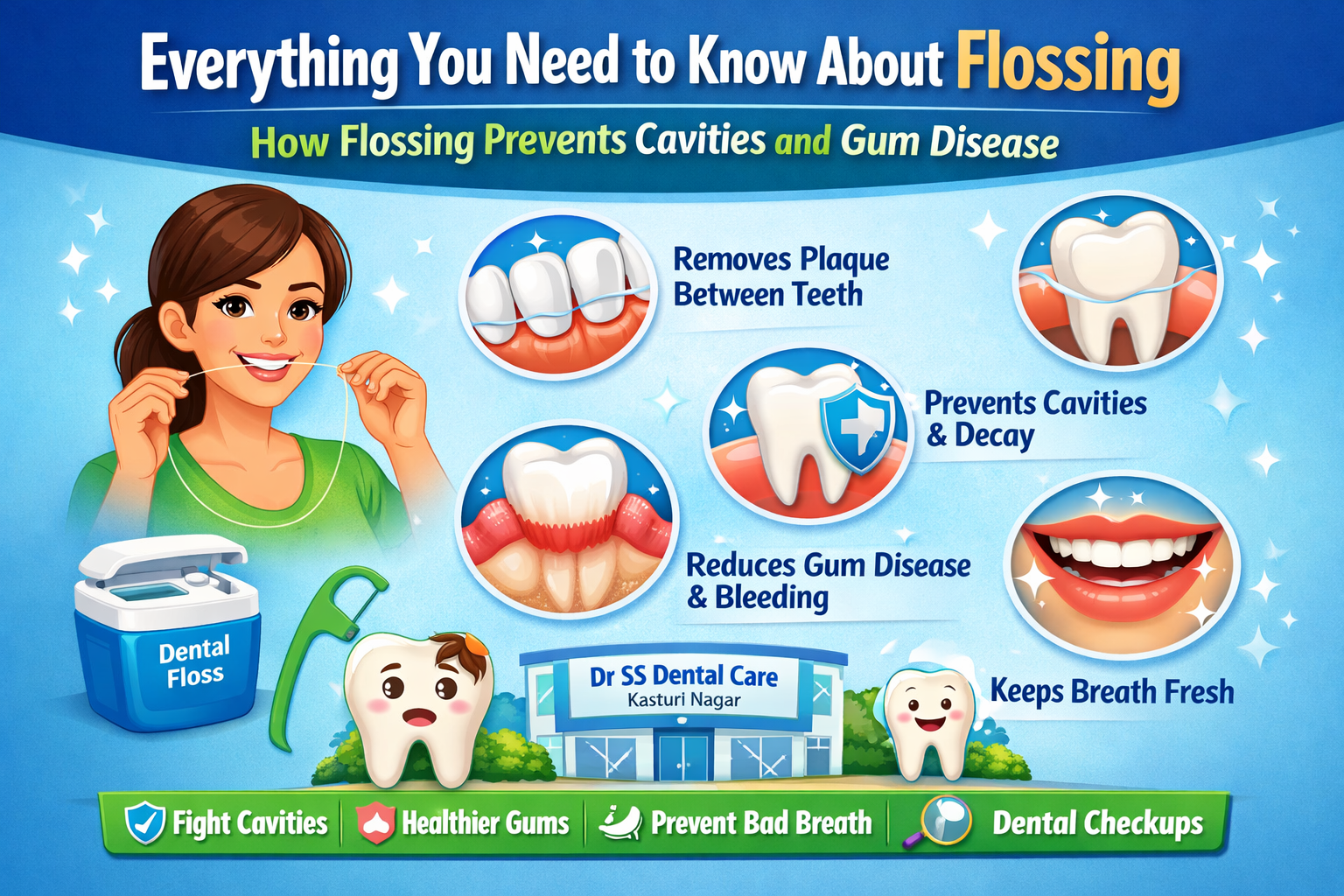
All You Need to Know About Flossing
Flossing is one of the simplest and most effective ways to maintain healthy teeth and gums. Moreover, floss, also called dental floss, is a thin, soft thread or filament used to clean between the teeth and remove food particles and plaque that brushing alone cannot reach. At Dr SS Dental Care, Bangalore,we emphasize preventive dentistry in HSR Layout , helping our patients build strong oral health habits that last a lifetime. Along with brushing and routine checkups, flossing plays a crucial role in preventive dental care, therefore protecting your teeth from cavities and gum disease.
Why Flossing Is Important
Even the best brushing routine can’t reach the tight spaces between teeth where food particles and plaque hide. This buildup can lead to cavities, gum inflammation, and bad breath. Fortunately, flossing removes this plaque and keeps your mouth cleaner and healthier.
In addition, when combined with regular dental checkups in Whitefield, flossing becomes a key part of preventive dental care in Whitefield. It’s a simple daily habit that can prevent serious dental problems and help maintain a strong, healthy smile for years.
Key Points About the Importance of Flossing:
-
Reaches areas between teeth that brushing can’t
-
Prevents the buildup of harmful plaque
-
Supports long-term oral health
-
Works together with dental checkups to avoid serious issues
How Often Should You Floss?
Most dentists recommend flossing once a day. The best time is usually before bedtime, after brushing, so your mouth stays clean overnight. However, some people prefer flossing in the morning or after meals. What matters most is consistency.
Even just a few minutes of flossing every day can make a huge difference in your oral health. For example, think of it as a small investment that pays off in fewer cavities, healthier gums, and a fresher smile.
Benefits of Flossing
Flossing regularly provides many benefits:
-
Prevents cavities and tooth decay in areas your toothbrush cannot reach
-
Reduces gum inflammation and bleeding
-
Freshens your breath naturally
-
Maintains stronger teeth and healthier gums
-
Supports overall oral health as part of preventive dentistry
Indeed, flossing is simple, yet its impact is significant. A small daily habit can prevent larger dental problems and reduce future treatment costs.
Traditional Floss or Floss Picks: What Works Best?
Choosing the right flossing tool depends on your preference and comfort. Both options are effective; however, they have differences that may make one more suitable for you:
Traditional Floss:
-
Allows precise cleaning between each tooth
-
Gives better control over pressure and technique
-
Can reach tight spaces that some floss picks may miss
-
Comes in different types (waxed, unwaxed, flavored) for personal preference
-
Can be used for complex dental work like braces or bridges
Floss Picks:
-
Convenient and easy to use, especially for beginners
-
Ideal for quick flossing on-the-go or while traveling
-
Usually easier for children or seniors to handle
-
Less time-consuming than traditional floss
-
Some picks have handles that make it easier to reach back teeth
How to Floss Your Teeth the Right Way: A Simple Step-by-Step Guide
Proper technique is key to effective flossing:
-
Take about 18 inches of floss and wind it around your fingers.
-
Slide it gently between your teeth using a zig-zag motion.
-
Curve it around each tooth and move it up and down to remove plaque.
-
Don’t forget the back teeth ,they are just as important.
Otherwise, using the wrong flossing method can hurt your gums or leave plaque on your teeth. Therefore, learning the correct way to floss is important, and visiting a preventive dentistry near me clinic can help you do it properly.
Age-Wise Flossing: From Children to Seniors
Children (around 2–3 years old): Begin flossing as soon as two teeth touch. Use soft, child-friendly flossers and guide them gently. Establishing this habit early helps children develop proper oral care routines and prevents plaque buildup between teeth.
Teenagers (around 12 years old): Once permanent teeth are fully grown, teens should floss daily. At this age, dietary habits like snacking and sugary foods increase the risk of cavities and gum issues, so flossing becomes essential to maintain healthy teeth and gums.
Adults & Seniors: Interdental cleaning remains important at every age. Daily flossing helps prevent gum disease, tooth loss, and plaque buildup, thus supporting overall oral health and maintaining a strong, confident smile throughout life.
What Happens If You Don’t Floss?
Skipping flossing can lead to cavities between teeth, gum disease (gingivitis or periodontitis), bad breath, and weakened teeth over time. Even so, a short daily flossing routine really helps reduce cavities and gum problems, protecting your smile from damage and costly treatments.
Final Thoughts
Dental thread cleaning keeps your teeth and gums healthy and prevents cavities and gum problems. By starting early and doing it correctly, you can make a big difference. Visiting Dr SS Dental Care, can help you maintain your oral health the right way.